

A product roadmap is a practical statement of where a company is going, what problems it will keep solving, and what it will deliberately avoid. For a mobile company, the strongest roadmap is built around recurring user needs rather than short-lived feature trends.
That distinction matters. Many apps grow noisy over time because they collect ideas from competitors, app store comments, and internal enthusiasm without a clear filter. The result is familiar: more screens, more settings, more notifications, and less clarity. A better roadmap does the opposite. It makes product choices easier by tying every release to a stable user outcome.
At ParentalPro Apps, the long-term direction can be understood through three connected jobs users are trying to get done: get useful help quickly, stay aware of family-related digital activity without excess friction, and navigate modern social interactions with better context and judgment. The company’s current app portfolio reflects those needs in different ways, from a chatbot and assistant experience with Kai AI to family awareness use cases in Seen, and socially relevant matching support in Blur.
The roadmap question is not “What should we build next?”
The better question is: What conditions keep showing up in users’ lives, and what kind of mobile support remains valuable across device cycles, carrier plans, and changing habits?
That is a more durable way to plan. People may switch from an iPhone 11 to an iPhone 14, an iPhone 14 Plus, or an iPhone 14 Pro. They may move between TMobile and Xfinity Mobile. Their app preferences may change, and their daily mix of services may include everything from messaging to delivery tools such as UberEats. But underneath those shifts, the core need usually stays stable: they want technology that reduces uncertainty, saves attention, and fits ordinary routines.
Roadmap planning becomes stronger when the company separates temporary demand from persistent demand. Temporary demand often sounds like this: “Users are asking for a flashy feature because another app added it.” Persistent demand sounds different: “Users want faster access to relevant information, clearer signals, and fewer actions to complete a task.” The second category deserves long-term investment.
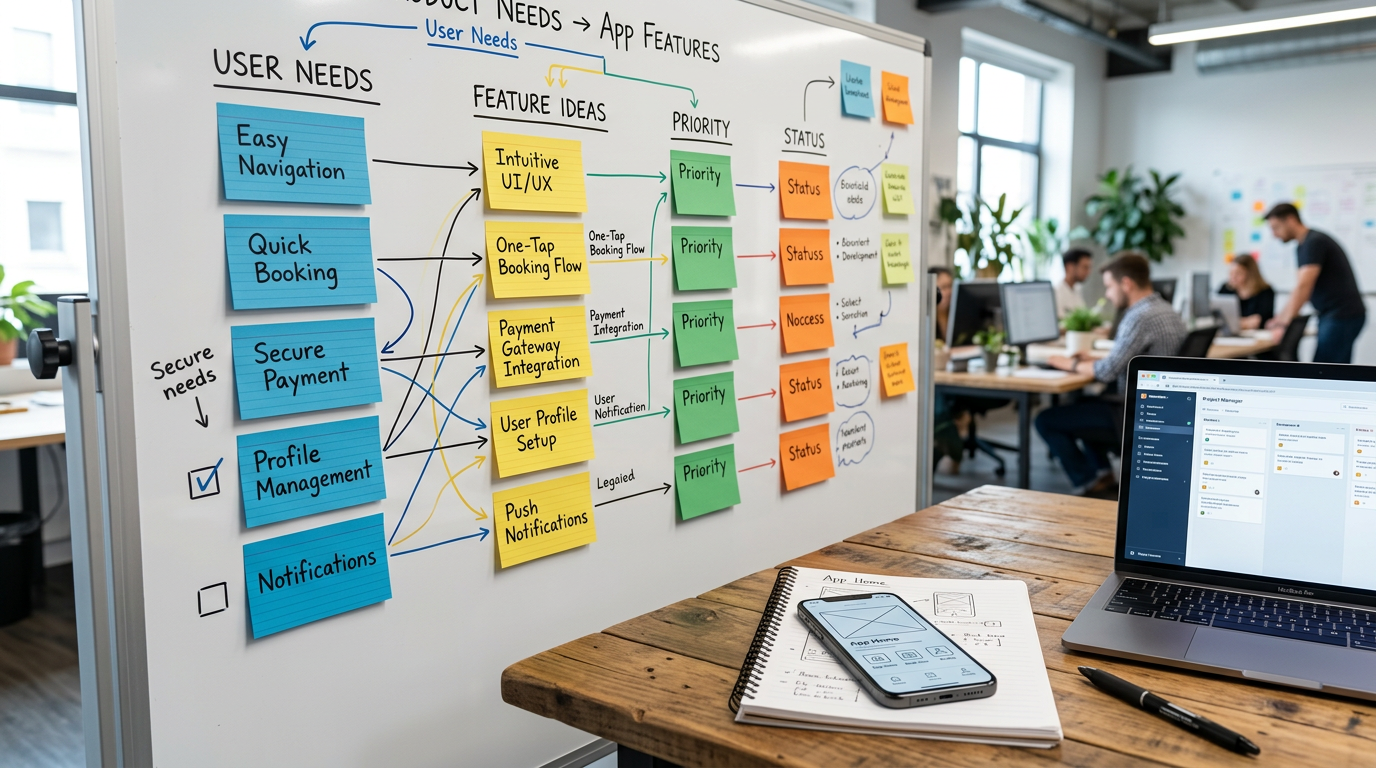
What long-term product direction looks like in practice
For ParentalPro Apps, long-term direction is less about expanding into every possible category and more about deepening usefulness in a defined set of everyday scenarios. That means product decisions should be judged against a few principles.
First, reduce ambiguity. If a product helps users understand what is happening, what changed, or what requires attention, it creates durable value. This is especially relevant in family-oriented mobile experiences, where uncertainty often creates more stress than the event itself.
Second, respect attention. A good app does not merely send more alerts. It helps users decide what matters now, what can wait, and what is simply background noise. In roadmap terms, this usually means prioritizing relevance, notification controls, digest-style summaries, and simpler interfaces over raw feature volume.
Third, design for normal behavior, not idealized behavior. People forget settings, skip onboarding screens, change devices, ignore instructions, and multitask constantly. Product teams that plan for perfect usage usually build fragile experiences. Teams that plan for real-life interruptions build products that last.
Fourth, earn trust slowly. Family awareness tools, assistant products, and socially oriented apps all operate in areas where users are sensitive to privacy, accuracy, and tone. A long-term roadmap in these spaces must include restraint. Some features are technically possible but strategically unwise if they increase confusion or feel intrusive.
Three product lanes, one underlying philosophy
Seen, Kai AI, and Blur may serve different moments, but they can still follow one roadmap philosophy: practical support with clear boundaries.
Kai AI - Chatbot & Assistant sits in the productivity and guidance lane. The roadmap logic here is not “make the assistant do everything.” It is “make the assistant useful in the moments where users need quick structure, clarification, or help completing a simple task.” Over time, that suggests product decisions around speed, ease of use, context retention where appropriate, and better handling of short, high-frequency requests.
Seen: WA Family Online Tracker belongs to the awareness lane. Here, the roadmap should stay anchored in clarity and responsibility. Family users rarely need more raw data for its own sake. They need signals they can interpret. The strongest long-term direction is not endless monitoring complexity; it is understandable patterns, simple views, and controls that reduce household friction rather than increase it.
Blur: AI Based Social Date App operates in a social decision lane. In this category, users are often trying to make sense of timing, relevance, interest, and compatibility cues. A durable roadmap should focus on reducing low-quality interactions and helping users make better judgments, not just increasing activity metrics.
These are different product categories, but the strategic pattern is consistent. The company is not trying to produce random apps. It is building around moments when people want less guesswork.
How product decisions map back to user needs
A roadmap becomes credible when each decision can be traced to a specific user need. One practical way to evaluate that is to group decisions into four buckets.
- Immediate utility: Does this help the user do something faster or understand something sooner?
- Confidence: Does this reduce doubt, ambiguity, or unnecessary checking behavior?
- Sustainability: Will this still matter after the novelty wears off?
- Operational simplicity: Can the feature remain reliable across common mobile conditions, devices, and usage patterns?
If a proposed feature scores weakly across these four areas, it probably does not belong on the roadmap yet. This sounds obvious, but it is one of the easiest disciplines for a growing company to lose.
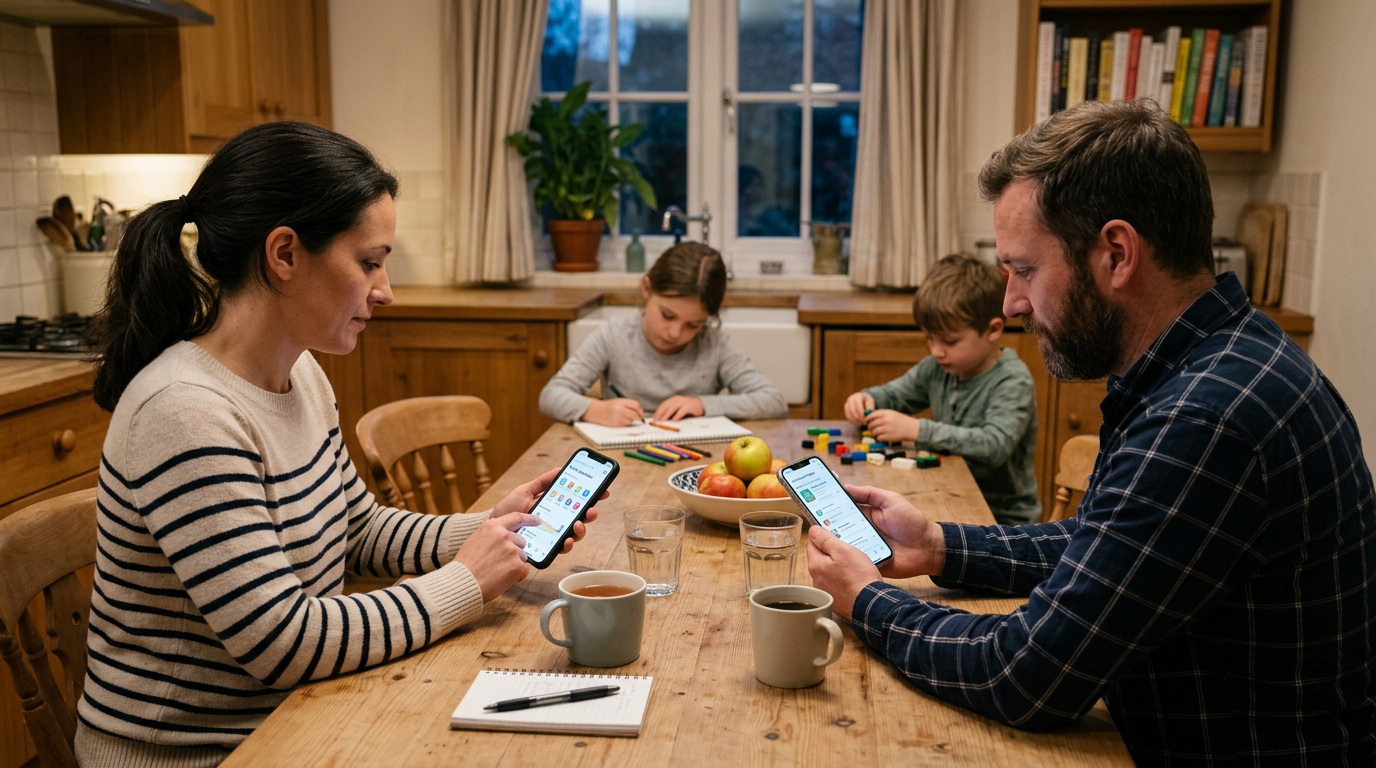
Consider a practical scenario. A family using multiple devices may include one person on an older iPhone 11, another on an iPhone 14, and someone else on an iPhone 14 Pro. Their network conditions may vary, and so may their technical confidence. In that environment, product strength comes from dependable basics: understandable status signals, low-friction setup, stable performance, and thoughtful defaults. A feature that looks impressive in a demo but creates confusion in mixed-device households is rarely a good roadmap bet.
What not to put on the roadmap
Vision becomes clearer when a company is also explicit about what it will not chase.
ParentalPro Apps should avoid treating roadmap planning as a race to maximize surface area. More features do not automatically make better apps. In fact, for family, assistant, and social contexts, overbuilding often weakens the product because users stop understanding where the value begins.
Several types of work deserve extra scrutiny:
- Features built mainly to imitate competitors
- Complex settings that solve edge cases while confusing most users
- Notification-heavy mechanics that create dependence rather than clarity
- Visual redesigns that look modern but make core actions slower
- Expansion into adjacent categories without a clear user problem to solve
Roadmaps get stronger when teams say no more often. That is especially true for a company managing multiple apps. Portfolio discipline matters. Each app should have a sharper identity over time, not a blurrier one.
A useful roadmap should account for the mobile environment around the product
User needs do not exist in isolation. They are shaped by the broader mobile environment: device upgrades, app store expectations, subscription fatigue, privacy concerns, and fragmented daily attention. Good roadmap planning has to include those conditions.
For example, users now expect onboarding to be short, controls to be obvious, and value to appear quickly. They are less tolerant of slow setup and less willing to grant broad permissions without a clear reason. They also compare every app experience, even across unrelated categories. The standard is not just “good for this niche.” The standard is “good enough to keep on my phone.”
That makes retention design part of roadmap planning. Not retention in the narrow sense of trying to keep people opening apps constantly, but retention in the stronger sense: the app remains worth having because it keeps solving a recurring problem cleanly.
This is where an educational product philosophy helps. A company should not only ship features; it should help users understand when to use what. A family awareness tool is not the same as a general communication app. A chatbot assistant is not a replacement for every workflow. A social app should not pretend to solve human judgment completely. Clear product boundaries improve trust.
That same thinking appears in the broader guidance ParentalPro Apps has shared about building practical mobile experiences around daily support and family awareness. The strongest roadmaps are often the ones that stay closest to the real context of use.
Questions users are really asking, even when they phrase them differently
“Will this app save me time, or just give me another thing to manage?”
A strong roadmap favors features that reduce effort within the first few uses. If the benefit only appears after extensive setup or repeated manual input, the bar for inclusion should be high.
“Can I trust what I’m seeing?”
This matters across assistant, family, and social categories. Product decisions should favor understandable outputs, transparent controls, and fewer opportunities for misreading signals.
“Will this still be useful six months from now?”
Durable products usually support recurring decisions, not one-time curiosity. Roadmaps should emphasize repeat value over launch-week excitement.
“Does this fit into normal life?”
If a feature requires ideal habits, technical confidence, or constant monitoring, it may not serve mainstream users well.
How a multi-app company can keep its roadmap coherent
One risk for any company with several apps is strategic drift. Teams can start solving disconnected problems, each with its own language and priorities, until the portfolio feels accidental. The fix is not to make every app identical. The fix is to define a shared operating logic.
For ParentalPro Apps, that logic could be expressed simply: build mobile products that help people interpret situations more clearly and act with less friction. Under that umbrella, different apps can serve different use cases while still feeling like they come from the same company.
That approach also helps with sequencing. Not every good idea belongs in the next quarter. Some capabilities are foundational and should be improved across the portfolio first, such as onboarding clarity, permission explanation, performance consistency, and settings simplicity. Others are category-specific and should only be advanced when the core experience is already strong.
A roadmap is therefore not just a list of releases. It is an order of operations.
The practical future: fewer promises, better fit
The most credible long-term vision for ParentalPro Apps is not based on trying to become everything to everyone. It is based on becoming steadily more useful in a narrow set of moments that people encounter often: needing quick assistance, wanting responsible family awareness, and making better social decisions.
That kind of focus is harder than feature expansion because it requires trade-offs. It asks a company to improve signal quality instead of adding noise, and to refine product fit instead of chasing breadth. But in mobile, that discipline is usually what separates apps people try from apps people keep.
For teams shaping future releases, the roadmap test is straightforward: if a feature does not make life clearer, faster, or more manageable for the intended user, it is probably not yet the right work. If it does, and if it can do so reliably across real-world devices, routines, and expectations, it belongs in the plan.
That is the kind of roadmap users can feel, even if they never read it.