ParentalPro Apps: A Mobile Company Focused on Safer Family Awareness and Practical Daily Support
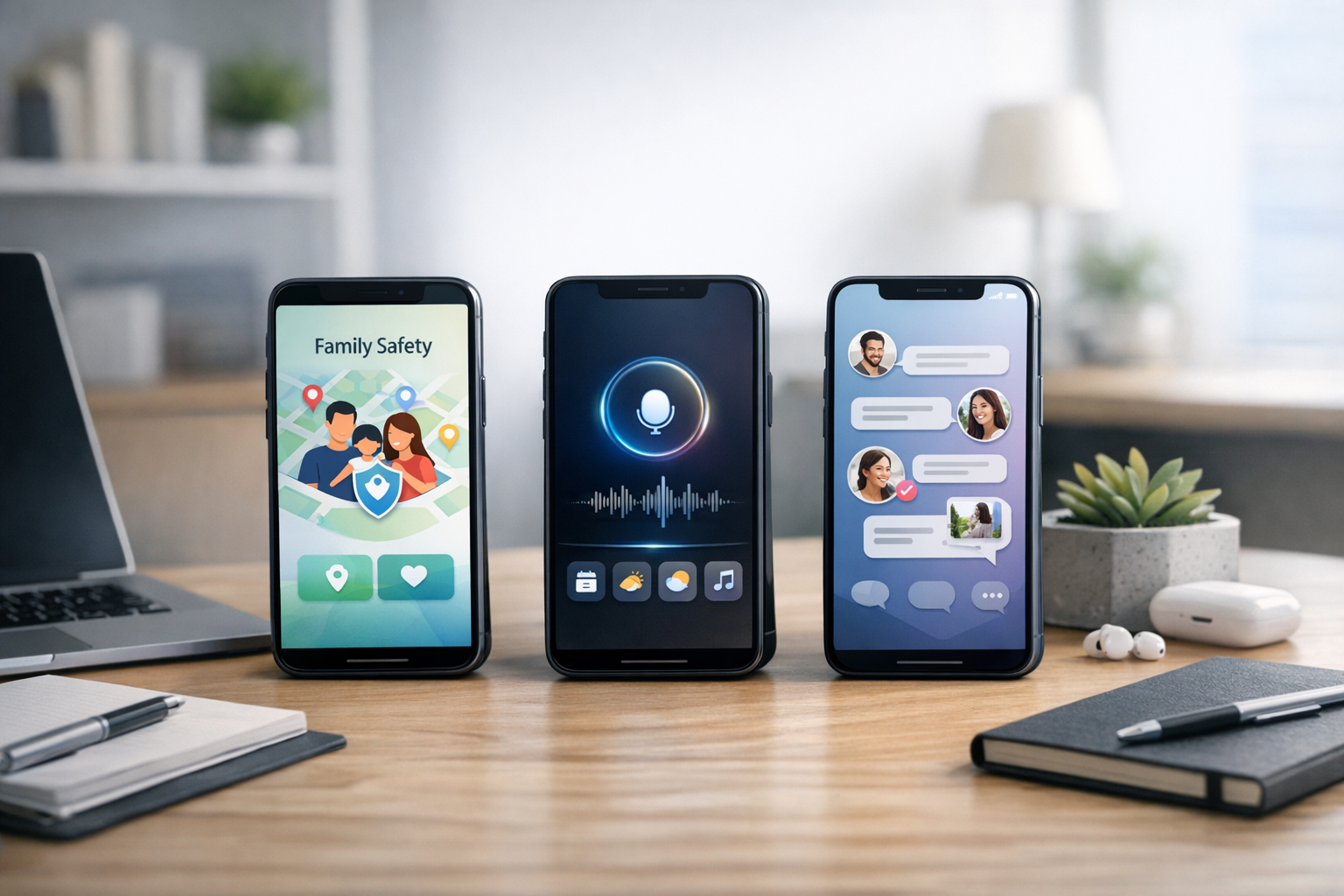
ParentalPro Apps is a mobile company building apps around everyday communication, digital awareness, and guided support. Our products include Kai AI - Chatbot & Assistant, Seen: WA Family Online Tracker, and Blur: AI Based Social Date App. While these products serve different needs, they share one common direction: helping people handle modern digital life with more clarity, better context, and fewer unnecessary obstacles.
This is not a company built around novelty for its own sake. The core idea behind ParentalPro Apps is straightforward: many people are dealing with practical problems that existing software often treats too casually. Parents want better visibility into patterns that affect their family. Individuals want a capable digital assistant that feels useful rather than distracting. People exploring new social connections want a more structured and intentional experience. The company’s work begins with those real situations rather than abstract features.
Why ParentalPro Apps Exists
ParentalPro Apps was established to address a gap between how people actually use connected services and how most tools respond to those habits. Families coordinate through messaging platforms, yet they often lack simple ways to understand online activity patterns. Users rely on smart tools for writing, planning, and everyday questions, but many still find generic assistant products too broad or inconsistent. Social discovery remains popular, yet many users want more control over how they connect and communicate.
The company’s mission is to develop mobile products that feel grounded in real behavior. That means studying what users are trying to accomplish, where confusion appears, and what kind of structure can genuinely help. In practice, ParentalPro Apps is interested less in adding digital noise and more in reducing friction. A good product should help a user make a decision, spot a pattern, save time, or communicate with more confidence.
That mission also reflects a broader reality of modern phone use. People move between many services every day, on devices ranging from an iphone 11 to an iphone 14, iphone 14 plus, or iphone 14 pro. They may be checking messages over tmobile or xfinity mobile, ordering dinner through ubereats, and switching immediately into family coordination or personal planning. Software has to respect that environment. It needs to be fast, readable, and useful in short bursts, because that is how most mobile behavior actually happens.
Our Product Philosophy: Practical Before Impressive
Every app company talks about solving problems. The more important question is how. At ParentalPro Apps, product philosophy comes down to a few operating principles.
1. Start with a narrow, real use case
Many weak products try to serve everyone at once. The result is usually clutter. ParentalPro Apps prefers a narrower starting point: identify a recurring problem, define the job the app needs to do, and build around that reality. This keeps the experience focused and easier to trust.
For example, a family online activity tracker should not behave like a general social platform. A digital chatbot should not bury simple tasks under too many modes. A social matching app should not make users guess what kind of interaction the product is designed to support. Clear use cases create better expectations, and better expectations usually lead to better user outcomes.
2. Respect the user’s time
Mobile products live or die on efficiency. People are not opening an app because they want a tour of the interface. They want to complete a task. That is why ParentalPro Apps values clean navigation, understandable flows, and interfaces that do not demand constant relearning. Useful software should meet the user where they are, whether that means checking a pattern quickly between meetings or asking a chatbot for help with a specific task.
3. Build for everyday behavior, not ideal behavior
Users are busy, distracted, and often multitasking. They may be managing school pickups, household routines, travel, and work messages at the same time. Product design has to reflect those conditions. Instead of assuming perfect attention, the company focuses on making actions simple, visible, and recoverable. If a user comes back after a long day, the app should still make sense.
4. Keep utility at the center
Features matter only when they help someone do something meaningful. ParentalPro Apps evaluates ideas based on utility first. Does the feature save time? Does it clarify something important? Does it reduce guesswork? Does it make a complicated interaction more manageable? These questions matter more than trend-chasing.
The User Problems ParentalPro Apps Focuses On
The company’s portfolio is intentionally varied, but the underlying problems are connected by a common theme: people want more control and better insight in their digital routines.
Family awareness without unnecessary complexity
One of the clearest problems the company addresses is family visibility in messaging-driven environments. Parents and caregivers often notice patterns before they notice events. A child or family member may suddenly change online routines, become active at unusual hours, or appear unreachable in moments when communication matters. Without context, small concerns can quickly turn into stress.
That is where products like Seen: WA Family Online Tracker fit. The need is not endless surveillance. The need is often pattern awareness: understanding online timing, noticing irregularity, and having a better basis for conversations at home. Used responsibly, this kind of tool can support family coordination and reduce uncertainty, especially in households where messaging services play a central role in daily communication.
This is also why the category has grown across the market. Users comparing different family and online-status tools may also look at products such as When: WA Family Online Tracker when evaluating how online activity monitoring apps are structured. The broader lesson is simple: families want visibility that is practical, understandable, and proportionate to real concerns.
Everyday digital help that feels organized
Another major user problem is the gap between asking for help and getting a useful answer. Many people use digital tools for writing, summarizing, planning, brainstorming, translation, and quick decision support. But broad-purpose tools can become messy when they try to do everything the same way for every user.
Kai AI - Chatbot & Assistant was developed around the idea that guidance works better when it is structured. Rather than leaving people with a blank box and no direction, categorized support can make the experience more practical. A student, a busy parent, a job seeker, or someone trying to draft a message often does not need infinite possibility. They need a starting point that matches the task.
That product direction reflects an important belief at ParentalPro Apps: a useful chatbot should reduce hesitation, not create more of it. A capable assistant should help users move from uncertainty to action. For many people, that means getting support in a format that feels organized and approachable instead of overly technical.
Social connection with more intention
Digital social discovery can be exciting, but it also creates friction. Users may feel overwhelmed by low-quality interactions, unclear expectations, or repetitive matching experiences. A social app should not only create introductions; it should help shape the conditions for better ones.
Blur: AI Based Social Date App addresses this area by focusing on how people present themselves, discover others, and move toward conversation. The broader problem here is not simply “finding more matches.” It is improving the quality and direction of social interaction so users can approach dating or social discovery with more confidence and less randomness.
How These Products Fit Together
At first glance, a family tracker, a chatbot assistant, and a social date app may seem unrelated. In practice, they are connected by the same operating view of mobile software: people need help navigating communication-driven environments. Whether the setting is a household, a personal productivity task, or a social interaction, the challenge is often the same. There is too much noise, too little context, and not enough structure.
ParentalPro Apps builds around that challenge. The company looks for moments where better product design can make digital behavior easier to understand and easier to manage. That is a more durable strategy than chasing whatever happens to be fashionable in app stores at a given moment.
What Users Should Expect From the Company
A company introduction is useful only if it clarifies what users can expect over time. From ParentalPro Apps, users should expect focused products, practical iteration, and attention to actual behavior rather than vague lifestyle branding.
That means the company is likely to keep investing in categories where communication patterns matter, where users need better digital assistance, and where mobile experiences can be made more efficient. It also means product decisions are expected to stay rooted in usability. The test is not whether a feature sounds impressive in a launch note. The test is whether it helps someone navigate daily life more easily.
That same principle is visible across the wider app ecosystem as well. For readers interested in how other teams approach focused mobile product development, Frontguard’s family and utility app portfolio offers another example of niche-first product thinking. Different companies may serve different user groups, but the strongest apps usually have one thing in common: they know exactly what problem they are trying to solve.
A Measured Approach to Building Mobile Apps
There is a tendency in software to equate ambition with scale alone. ParentalPro Apps takes a more measured view. A strong mobile company does not need to be everywhere at once. It needs to understand where it can be genuinely useful. That may mean serving families who want clearer awareness of online routines. It may mean helping users complete writing or planning tasks with less friction. It may mean giving social discovery a more deliberate structure.
What matters is consistency between mission, product design, and user need. When those three line up, apps tend to earn repeat use. And repeat use is usually the best sign that a product belongs in someone’s daily routine.
Final Perspective
ParentalPro Apps is best understood as a company centered on practical digital support. Its products include tools for family awareness, guided assistance, and social interaction, but the deeper focus is not category-specific. The deeper focus is helping people make sense of connected life in ways that feel manageable and relevant.
For users, that means approaching the company not as a collection of unrelated experiments, but as a portfolio shaped by one consistent question: where can mobile software provide clearer context, stronger utility, and a more usable experience in everyday situations? That question defines the mission, explains the product philosophy, and sets the direction for what ParentalPro Apps is trying to build.